 AI-Ready CMO
Benioff says goodbye to SEO. Salesforce's own guide disagrees
The CEO's post and the company's documentation point in opposite directions.
In partnership with

Happy Thanksgiving to everyone celebrating today.
Few things move a marketing budget faster than a famous CEO declaring a discipline dead, which is why Marc Benioff's post last week deserves a closer read than it received.
On Nov. 18, the Salesforce CEO welcomed Palmata, a tool that tracks how a company appears in AI answers, on X. "They’re asking Claude, ChatGPT, Gemini, and other AIs which brand to buy," he wrote of your customers, adding "No click. No referral. Nothing in your analytics." The post ended with "Goodbye SEO. Hello Palmata!"
Salesforce's own documentation disagrees with its chief executive. As SEJ points out, the company's guide to SEO and AEO, published Sept. 11 and linked from Palmata's own FAQ, says SEO "is still the foundation" and describes SEO and AEO as "two visibility layers for the same audience." The article announcing Palmata's launch, written by its head of product and engineering, said of SEO work: "That work remains essential."
Pedro Dias, a technical SEO product manager who used to work at Google, replied that "SEO isn’t traffic. It never has been."
Palmata itself is a sensible product: it monitors what assistants say about a business, recommends changes, and simulates their effect before publication, and it is built into Marketing Cloud. The trouble is the framing. A post telling your CEO that search is over invites a reallocation away from the very work that, by Salesforce's own account, AI visibility still rests on.
That is the real exposure for CMOs this week. The budget conversation can happen on the strength of a viral post, and your team inherits the consequences in the spring. The best defense is the one Salesforce's guide already recommends—track "both sets of metrics," organic traffic and rankings alongside how often AI assistants cite you, and report them together so neither looks like the whole story.
When someone forwards that post to your CEO, which of your numbers will show what search is still doing for the business?
ALSO TODAY
One unnamed site that left Google's AI Overviews and AI Mode lost hundreds of thousands of daily impressions and barely any clicks, PPC Land reports.
Google rolled out a collapsible sidebar on its desktop homepage worldwide for jumping back into recent AI searches, SER reports.
Target says shoppers move to purchase at about twice the rate when they use its Ask Target assistant, CX Dive reports.
Today’s sponsor:
Are your sales foundations ready to scale?
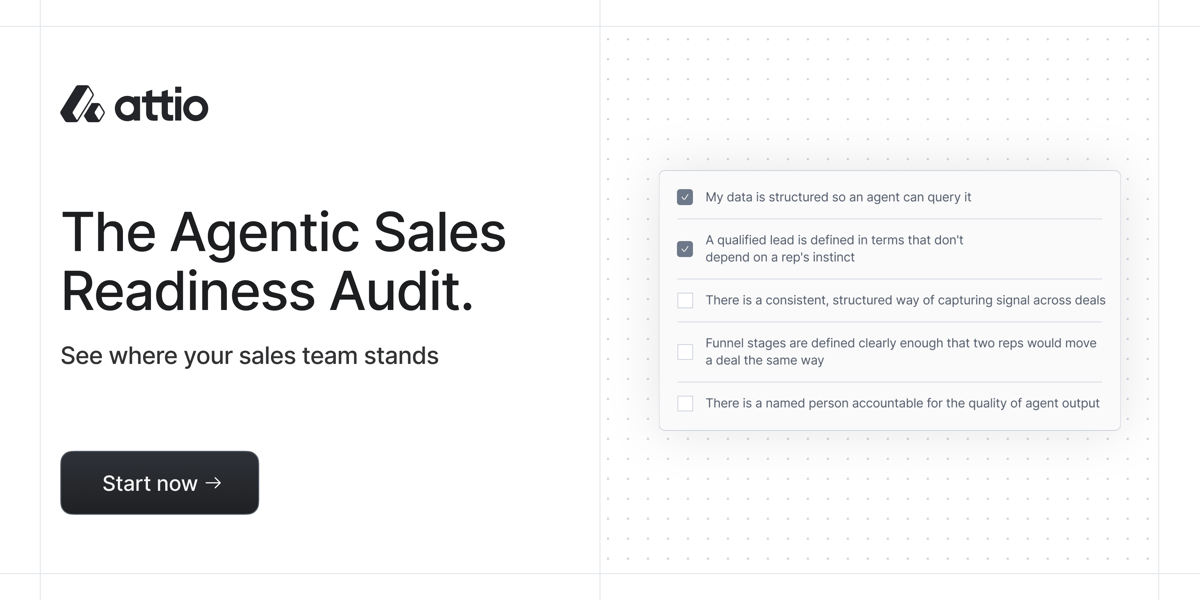
You’re growing from 10 reps to 100. Your agents can only work with the data and processes you give them, and the foundations you set now decide whether your systems hold.
Attio’s agentic sales audit looks at where you are today and shows you where to start, whether that’s your data foundation or a fuller agentic sales process.
TALK ON THE MARKET
Neil Patel, founder of NP Digital, on X:
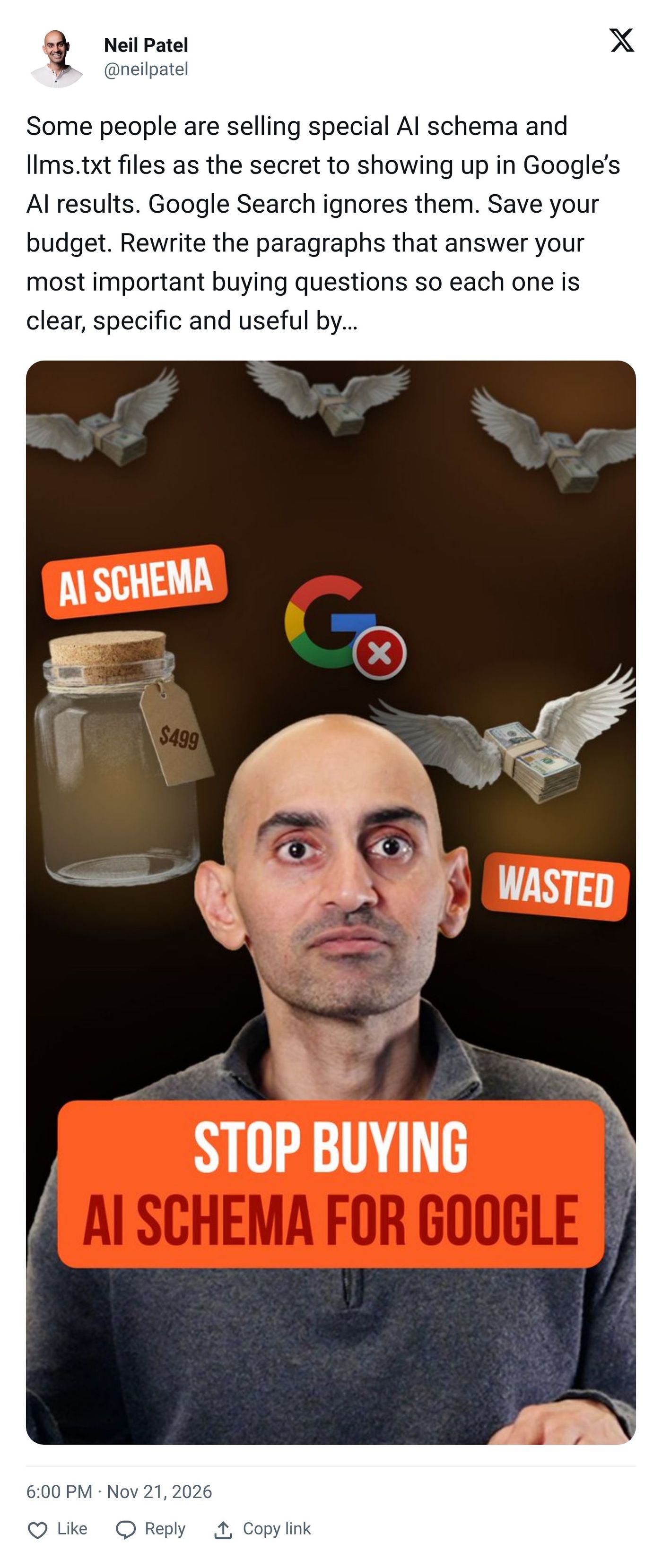
The advice is unglamorous, which is usually a good sign. Every new visibility tool arrives with a shortcut attached, and the work that keeps paying off is still the paragraph that answers a buyer's question plainly. Ask your team for the ten buying questions that matter most and the page that answers each one.
NUMBERS MATTER
61%. Share of senior marketing leaders who have adapted content and SEO/AEO so machines can interpret it more easily, in Gartner's 2026 Marketing Strategy and Engagement Survey, Digiday reports. Only 30% have designed interfaces or workflows for agent transactions, and 42% are monitoring and correcting misinformation about their brands in AI answers.
Gartner sells advice on exactly this transition, and the survey records what leaders say they have done, not whether it worked. The gap between 61% and 30% still tells a clear story: marketers are preparing to be found by machines well before they prepare to be bought from by them.
TRY THIS TODAY
Pick one page that answers a key buying question and plan its refresh.
Using the attached Search Console export and the live results for [TARGET KEYWORDS], compare our page at [CONTENT URL] with the pages outranking it and list the changes that would close the gap.
Flag any assumption of mine that the data contradicts, and rank the changes by expected impact.
Paste in: the page URL, a Search Console query export, the GA4 landing page report, and the competitors you see ranking. You get back: a ranked list of changes grounded in the gap between your page and the ones beating it. The full Content Refresh Strategy prompt adds keyword targets, content enhancement ideas, a technical SEO checklist, a timeline, and the metrics to track after the refresh.
CMO CORNER
Make time for the work that removes future work.
Every few months, a new tool or a confident post sends the team chasing a new kind of visibility. Each chase generates work, from new dashboards and reports to new briefs for the agency, and very little of it removes work later.
The work that does is usually dull. A clear page for every important buying question, a shared definition of what you measure, and one report that puts search and AI citations side by side all keep paying off long after the hype moves on. That work needs protecting on purpose, because nothing urgent will ever schedule it for you.
This week, ask each lead to name one recurring task that exists only because something upstream was never fixed, and pick one fix to fund in December. Then put a standing two-hour block on the calendar each month for that kind of work, and defend it the way you would defend a launch.
TOOL UPGRADE
Three tools for content teams doing the unglamorous work:
Originality.ai — best for marketing leaders establishing content quality standards across distributed teams. Try Originality.ai here →
Sudowrite — best for brand storytelling and narrative-driven content marketing. Try Sudowrite here →
Paraphraser.io — best for content teams doing quick first-draft rewrites before human editing. Try Paraphraser.io here →
→ We have 300+ curated, filtered, and categorized AI tools in our directory. Browse to find the best ones that help your marketing team.
LEARN THIS
AI SEO Mastery: Get CITED is our 12-lesson course, about 60 minutes, on making your brand a source AI assistants cite. It starts with how AI engines actually choose sources, then works through the CITED framework: Clarity, Infrastructure, Trusted Sources, Extractable Content, and Distribution, including an honest assessment of llms.txt. Use it when someone senior asks whether SEO still matters and you need an answer grounded in how these systems pick their sources.
First step this week: run the 10-point brand consistency audit from the Clarity lesson on your own brand.
→ We publish workshops, courses, guides, manuals, and more on AI marketing for free. Browse our learning resources for free.
Reach marketing leaders through us
You’re reading this, and so are nearly 20,000 of your peers. Some of them are your next customers.
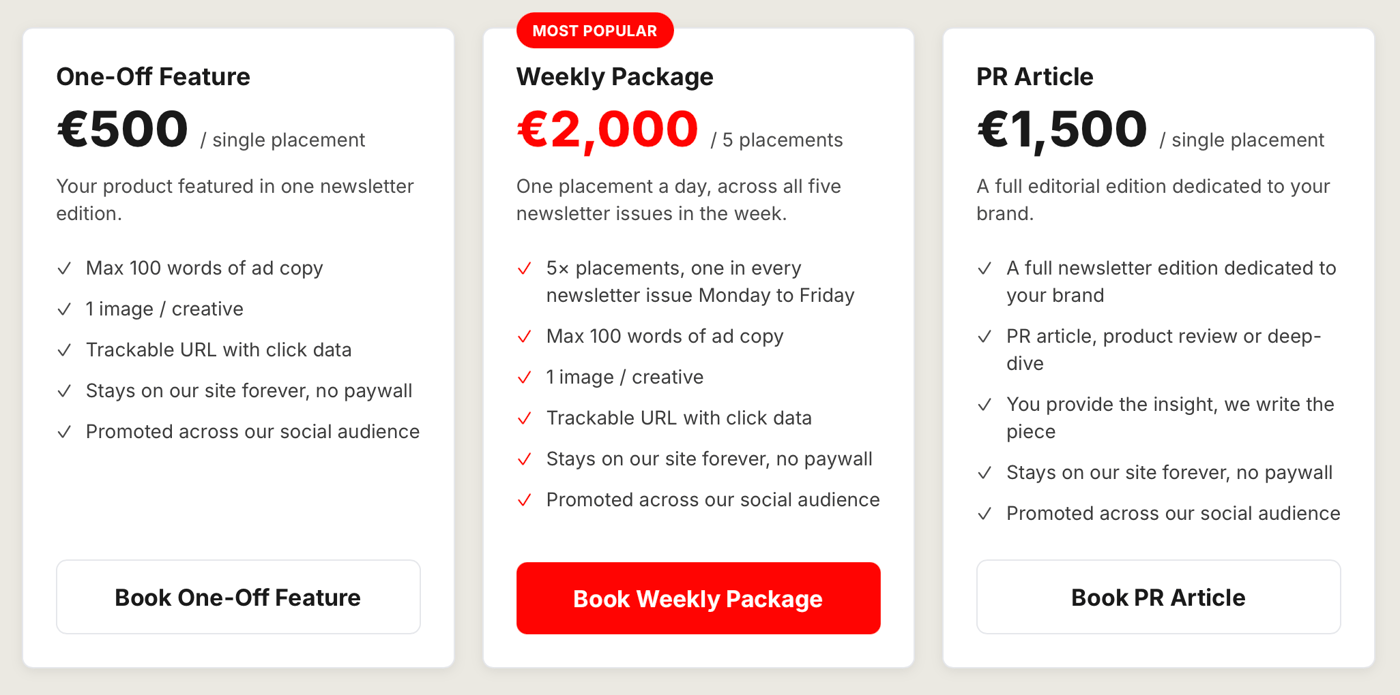
If you sell to marketing teams, a single placement is €500 and a full week is €2,000.
If you want to place an ad, simply reply to this email or check our media kit.
From our other newsletters today:
AI-Ready Ads: Calgon cloned one actor's voice for six markets MurphyCobb and Locaria carried one French performance into six more languages, with the actor's approval for the clone.
AI-Ready GTM: Let a robot watch your top accounts' newsrooms for a reason to call Monaco's Sam Blond says AI should catch funding news and new hires for you, from $19 a month.