

In partnership with

Made it to Friday.
Somewhere in your company there's a spreadsheet counting how much people use AI. It might be yours.
Shopify wrote the famous version. In April 2025, CEO Tobi Lütke told staff that "reflexive AI usage is now a baseline expectation at Shopify" and added AI questions to performance and peer reviews. Teams also had to show why AI couldn't do a job before asking for more headcount.
On the Sources podcast, in an episode published October 28, he said it didn't matter how people answered the review question, Search Engine Journal reports. Having it there could "give a company a reputation to live up to." Both rules now run on their own, he said: "I don't have to enforce these kind of things."
So the question was there to send a message. That's more honest than most AI adoption metrics.
It's also not the whole story. Lütke said an AI skeptic who's "just kind of trying to lay low" will never be a top performer where everyone around them uses AI agents.
And his staff have a name for AI output handed to a colleague unread, he said in September: a slop grenade. As SEJ points out, a review question about adoption can't tell you whether anyone checks the draft before it reaches a client.
Other companies are going further and paying for it. Ralph Lauren added "AI metrics" to the factors that can adjust executive bonuses, Digiday writes, citing Reuters, which found about 12% of S&P 500 companies disclosed AI goals in executive incentive plans this year, up from 5% in 2024.
Here's my read for a marketing team. Measure usage if you like, but don't pay for it. Pay for the outcome the AI was supposed to move, and check the work the way you always did. Usage tells you someone opened the tool. It doesn't tell you the email was any good.
What's the one AI number on your team's scorecard right now, and would you bet your own bonus on it?
ALSO TODAY
X has opened Lead Gen Ads, in-feed forms that never leave the app, to all advertisers worldwide, PPC Land reports.
Amazon's ad business brought in almost $20 billion in the third quarter, up 12%, as it bets on agentic AI for growth, Digiday reports.
Agencies have embraced AI agents but left team structures and career paths largely untouched, Digiday reports, and Monks' head of data and media predicts full-time "AI checkers."
Today’s sponsor:
It's time to set up your holiday streaming campaign

Are you ready to reach holiday shoppers on CTV? For many streamers, the season is already underway.
Last year, according to Roku internal data, holiday content searches on Roku saw an 86% increase during October. And in November, those searches rise an average of 39% weekly. This surging holiday spirit is mirrored by consumer activity, as about half of Roku streamers shopped Black Friday and Cyber Monday deals in 2025.
Meeting those shoppers is easier than you might think. Begin with the seasonal outcome you hope to drive: awareness, online sales, leads, store visits, or another measurable goal. From there, define your audience, upload your creative, set the budget and campaign dates, and establish measurement before launching. You can even create a shoppable ad unit that lets streamers buy with a click of their remote.
Our holiday playbook offers a month-by-month guide to reaching shoppers during this all-important time of year.
First-time spenders get a $5,000 match on the first $5,000 spent with code BEEHIIV5K. Terms apply.
TALK ON THE MARKET
Brian Halligan, co-founder of HubSpot, in six words:
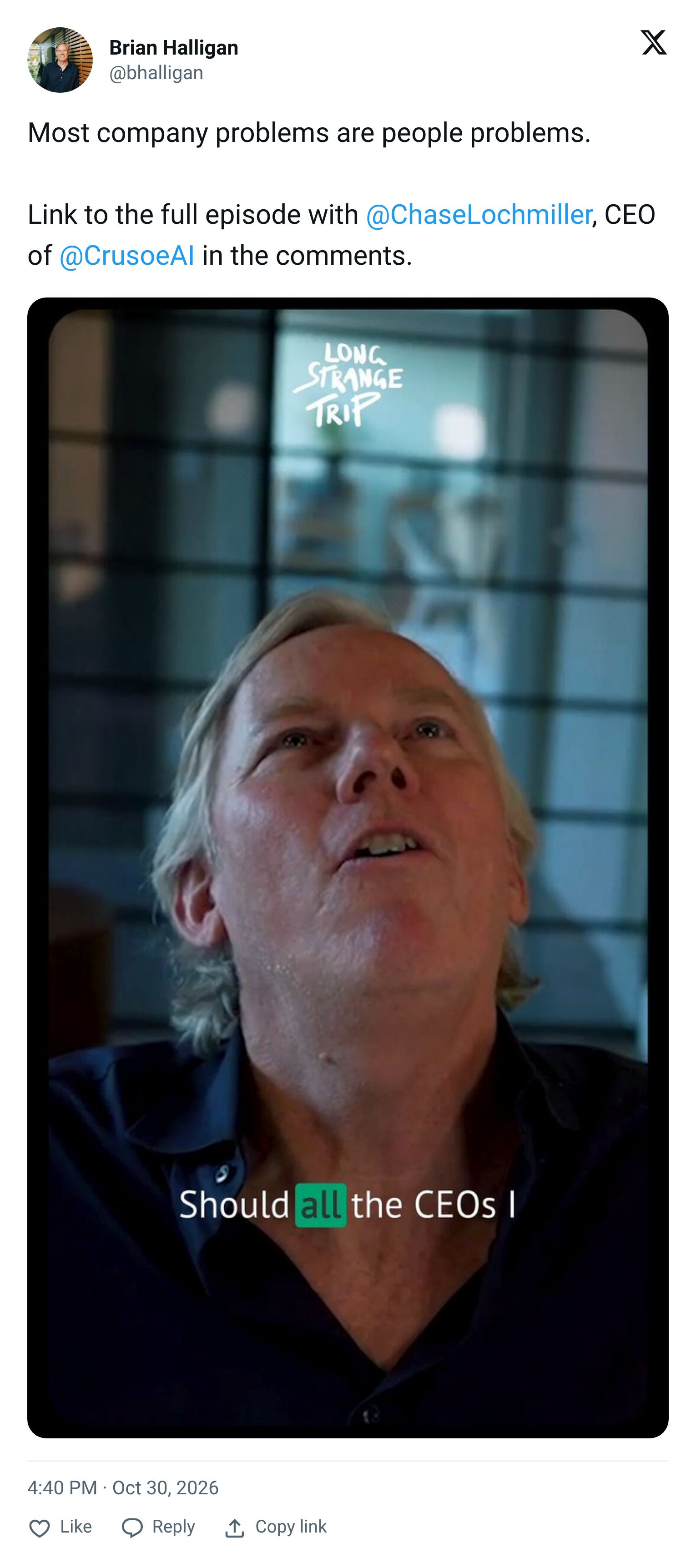
Today's Focus is that sentence. The AI was the easy part.
NUMBERS MATTER
27.2%. People running customer-facing AI who could quantify its results precisely from records or reports, in a Sprinklr-backed Metric Sherpa survey of 807 U.S. marketing, service and CX practitioners, per PPC Land. Yet 91.8% said results met or beat expectations.
Sprinklr sells AI agents, and the 91.8% comes from the 536 respondents who run AI live. Plenty of happy people, then, and most of them can't back the number with records.
TRY THIS TODAY
Swap the AI usage count on your team's scorecard for outcomes.
Here is how my team uses AI today and our goals for next quarter: for each use case, name the outcome it should move, how we'd measure it, and who checks the output before it ships.
Then cut the list to the three use cases most worth funding and give me a 90-day plan for them.
Paste in: a list of how your team uses AI today, by workflow or person, plus next quarter's goals. You get back: a table of use cases with outcome, measure and reviewer, and a 90-day plan for the top three. The full AI Adoption Roadmap prompt builds a phased plan with vendors, budget and change management.
CMO CORNER
Create psychological space, not tension.
An AI push lands differently depending on how it's delivered. Said with menace, it teaches people to hide problems. Said with room to question, it teaches them to raise problems early, which is the only way AI work gets safer.
Today's Focus shows the gap. A review question can get people using AI. It can't get them to tell you when the output is wrong, and a scared team stops telling you anything, so you find out from a client.
Here's how I'd run the second version. Ask each person to bring one thing AI did badly for them this month, and make it the first agenda item, before the wins. Thank whoever found the worst one. Keep adoption targets out of individual reviews until you can check output quality.
Then go first. Share the AI draft you nearly sent and what was wrong with it. If you show your mistakes, your team will show theirs.

TOOL UPGRADE
Three tools a skeptical team can try on its own terms, no mandate needed:
ClickUp — best for growth-stage marketing teams that want AI summaries and docs inside their project tool, if they'll give it the weeks of setup it needs. Try ClickUp here →
Marblism — best for small teams that want AI agents for inbox, content, social and lead generation, from $24 a month with every agent included. Try Marblism here →
Ocoya — best for teams that want to test AI-written social posts and scheduling on a free tier before anyone buys a seat. Try Ocoya here →
→ We have 300+ curated, filtered, and categorized AI tools in our directory. Browse to find the best ones that help your marketing team.
LEARN THIS
The Autonomous Leadership Reflection Map is our workbook for leading through systems instead of presence. It has a Let-Go Inventory of habits to drop, a planner for swapping defaults like checking Slack all day for a set rhythm, a calendar with a protected thinking block, and weekly reflection questions. Use it when your team is anxious about AI and you're tempted to supervise harder.
First step this week: answer one of its questions honestly. "If I disappeared for 3 weeks, what would stop working?"
→ We publish workshops, courses, guides, manuals, and more on AI marketing for free. Browse our learning resources for free.

Reach marketing leaders through us
You’re reading this, and so are nearly 20,000 of your peers. Some of them are your next customers.
If you sell to marketing teams, a single placement is €500 and a full week is €2,000.
If you want to place an ad, simply reply to this email or check our media kit.

Want to see case studies of AI-powered campaigns? We publish a daily edition on the most creative use cases of AI in advertising.
