 AI-Ready CMO
Bustle is now selling brands a way into AI answers
Innisfree's visibility across 200 skincare prompts grew 30%, by Bustle's own case study.
Happy Thursday.
There's a new line coming for your 2027 content budget, and the person selling it is a publisher.
Bustle Digital Group, which owns Bustle, Nylon, Elite Daily and Scary Mommy, has built a paid offering to get brands cited in AI answers, Digiday reports. Internally it's called ECHO.
BDG and Profound, which sells AI visibility analytics, spend two to four weeks on eight to 10 topics the brand wants to own and 25 to 50 prompts for each, to see which sites the answer engines already cite. Agents trained on BDG's titles shape the editorial strategy, BDG's editors write the pieces, and BDG runs paid media on Reddit, still a big citation source for answer engines, to push them.
At least three brands have paid. The results are BDG's own case studies, on Profound data. In a campaign from August 11 to September 30, Innisfree's visibility across 200 tracked skincare prompts grew 30%, and Bustle's citation rank went from #709 to #12. Pampers moved from #2 to #1 in AI visibility for fragrance-free diaper questions after a Scary Mommy explainer on its Swaddlers going fragrance-free.
Two details I liked. The advertiser has "no hand in the actual creative development at all," says Graham Howes, BDG's svp of distribution and AI intelligence, because heavy-handed advertorial is unlikely to get cited. And Josh Blyska, Profound's head of insights, admits the chain breaks before the sale. On whether influence in ChatGPT carries cleanly through to the transaction, his own answer was "no, not right now."
That's the whole category in one quote. You'd be buying visibility, measured by the vendor's partner, on a scoreboard that doesn't reach revenue yet. BDG wouldn't say what it charges.
It may still be worth it. Good PR never came with last-click attribution either, and brands paid for it anyway. Just know which number you're buying, and agree up front what would make you stop.
If a publisher can get your rival cited as the answer in seven weeks, what's your plan for the same prompts?
ALSO TODAY
Amazon's Ad Tag now sets a first-party cookie on advertisers' North American sites, linking a visitor's events for 30 days after their last page view, PPC Land reports.
LinkedIn's AI search marketing lead says accounts with over 10,000 followers and company pages make up 65% of LinkedIn citations in AI chatbots, citing Meltwater, Social Media Today reports.
Tarte and Crocs plan TikTok-only products for holiday live shopping, with eMarketer putting U.S. livestream retail sales near $20 billion this year, Digiday reports.
Today’s sponsor:
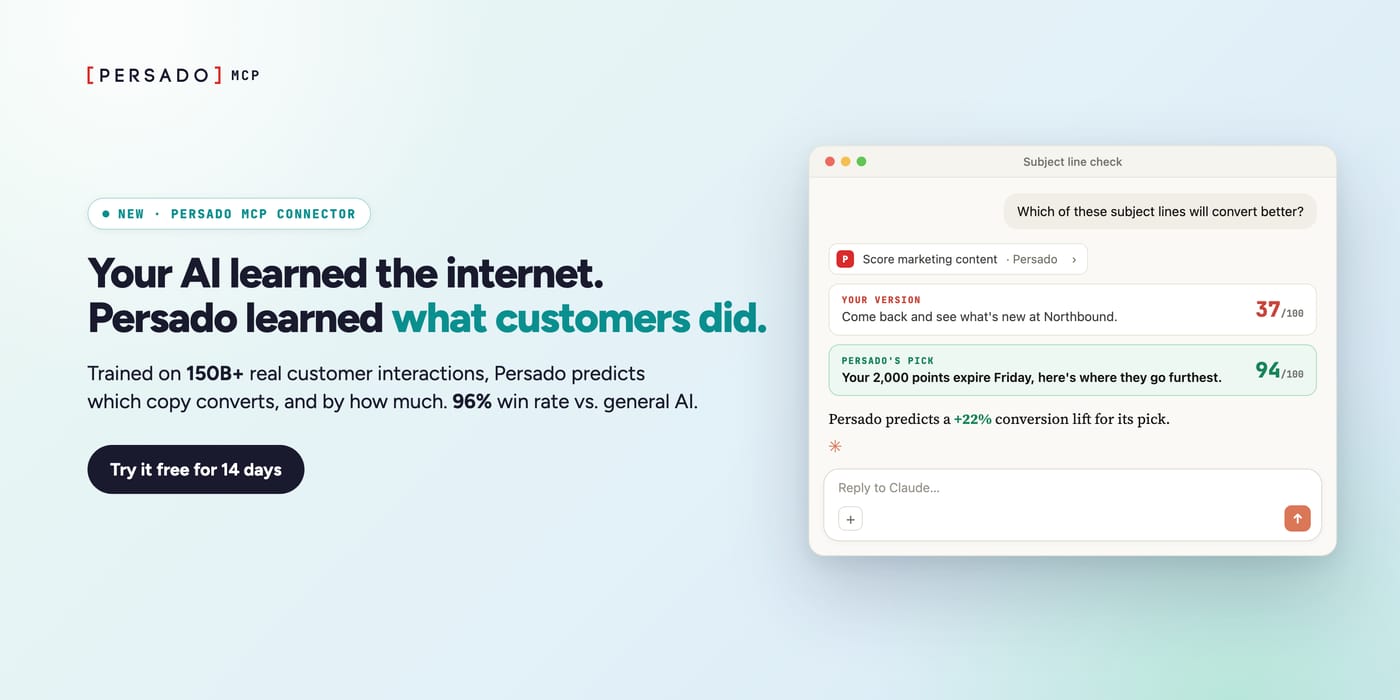
Your AI learned the internet. Persado learned what customers did.
Persado trains its models on how customers actually behave, using 150B+ real customer interactions, 120K+ performance-labeled campaigns and 10+ years working with top retail, hospitality and finance brands.
Give it a draft and it scores every version, predicts how much each will lift conversion, improves the weak ones and explains why. It calls the winning message 87.5% of the time, against 51% for general AI models, and its own messages win 96% of the time against general AI.
And now it works where your team already writes: the new Persado MCP connector adds Persado to Copilot, Claude, ChatGPT or Gemini. Your team can try it free for 14 days.
Try it free for 14 days, no card →
TALK ON THE MARKET
Gary Vaynerchuk, CEO of VaynerMedia, on distribution:
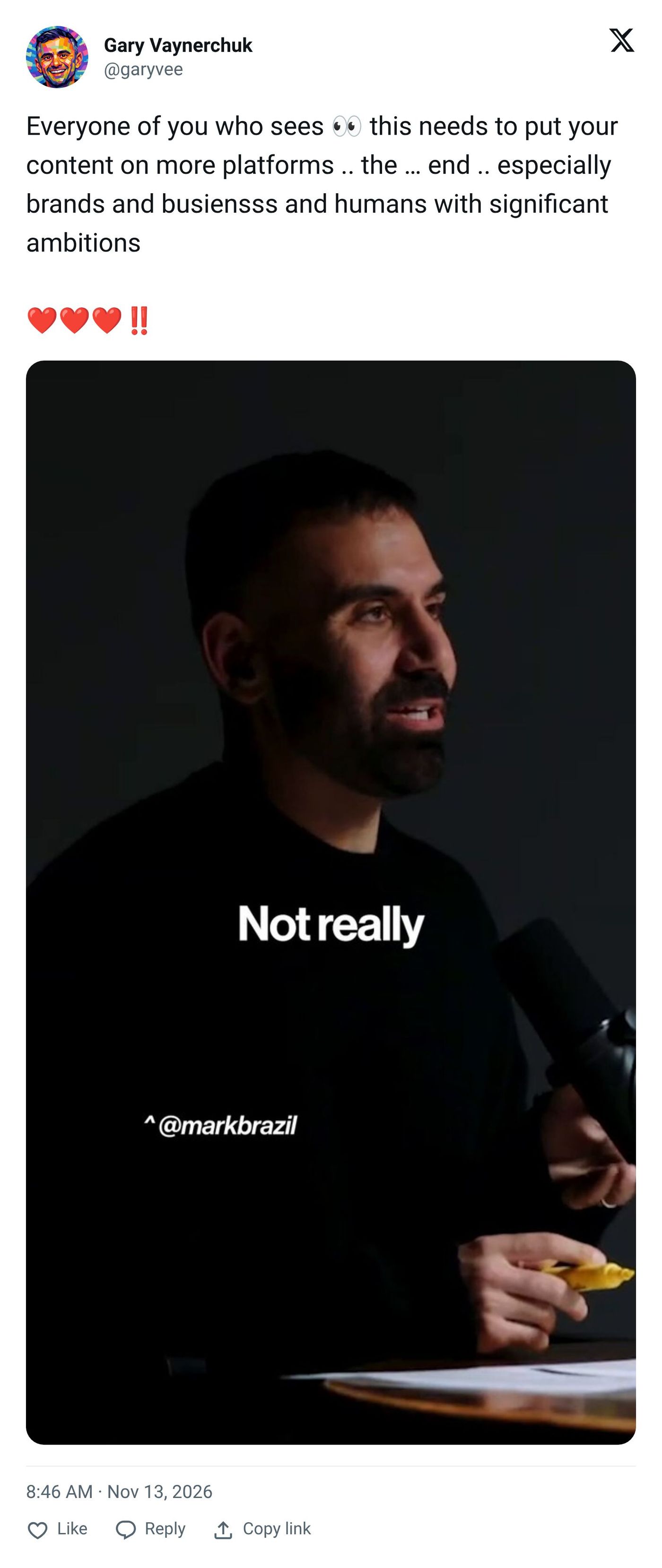
The typos are his, and so is the point. In today's Focus, BDG pushes its brand pieces onto Reddit because answer engines cite it. More platforms only helps if they're the ones the answers actually read, so check which sites get cited in your category before you staff up for a new channel.
NUMBERS MATTER
59%. Share of final B2B decision-makers who said a vendor's poor or missing thought leadership contributed to dropping it from consideration, in Edelman and LinkedIn's 2026 B2B Thought Leadership Impact Report, PPC Land reports. Fieldwork ran September 4 to 21, with 1,135 executives in seven countries.
Edelman sells content strategy and LinkedIn sells the ads that carry this content, so both like this answer. The figure rests on 317 final decision-makers, self-reported, with no margin of error published. Still, it measures the losing side, which almost nobody tracks.
TRY THIS TODAY
Map the questions your category gets asked, including in AI answers, and find the ones you can own.
Using our Search Console export, keyword export and page list, build a map of 4 to 7 pillar topics in [CATEGORY] with clusters under each, including the questions people ask AI assistants.
Then flag 5 gaps where competitor coverage is weak or stale and we can add something first-hand.
Paste in: your Search Console query export, a keyword tool export, your page list and two or three competitor domains. You get back: a pillar and cluster outline and a short gap list. The full Topical Authority Map Builder prompt adds search demand and intent for each pillar and a three-level content hierarchy.
CMO CORNER
Build frameworks that let others lead.
When a publisher pitches an AI visibility package, the decision usually lands on your desk, because nobody else knows how to judge it. That's a framework problem.
Your SEO lead, content lead and PR lead each see a piece of this. SEO sees prompts and citations. Content knows what earns them. PR owns the publisher relationships that BDG is now selling against. Nobody owns the whole question, so you end up refereeing.
Build them a scorecard instead. Three questions for any AI visibility spend: which prompts are we buying into, whose tool measures the result, and what happens to the number once we stop paying. Add a test budget they can approve without you.
Then let the three of them run the first evaluation together and bring you one recommendation. You'll learn more from how they argue than from the vendor's deck, and next time they won't need you to start.
TOOL UPGRADE
Three tools for content built to be cited:
Scalenut — best for B2B and SaaS teams producing a lot of content that want keyword research and AI drafting in one workflow. Try Scalenut here →
RankPrompt — best for teams using AI writers that want to test prompt variations and see which ones produce content that ranks. Try RankPrompt here →
Taplio — best for teams where LinkedIn is the main platform, with AI-assisted posting, engagement tracking and a lead database. Try Taplio here →
→ We have 300+ curated, filtered, and categorized AI tools in our directory. Browse to find the best ones that help your marketing team.
LEARN THIS
The AI Content Library is a 50-minute workshop replay on the Lego Brick Method. It shows, live, how to pull atoms out of existing content, the stats, quotes, analogies and proofs that stay valid for six months or more, and turn them into a content memory that feeds emails, LinkedIn posts and PR articles. Use it when every new asset still starts from a blank page.
First step this week: take your three best-performing pieces and pull ten atoms from them into one shared doc. That's the first shelf of your library.
→ We publish workshops, courses, guides, manuals, and more on AI marketing for free. Browse our learning resources for free.
Reach marketing leaders through us
You’re reading this, and so are nearly 20,000 of your peers. Some of them are your next customers.
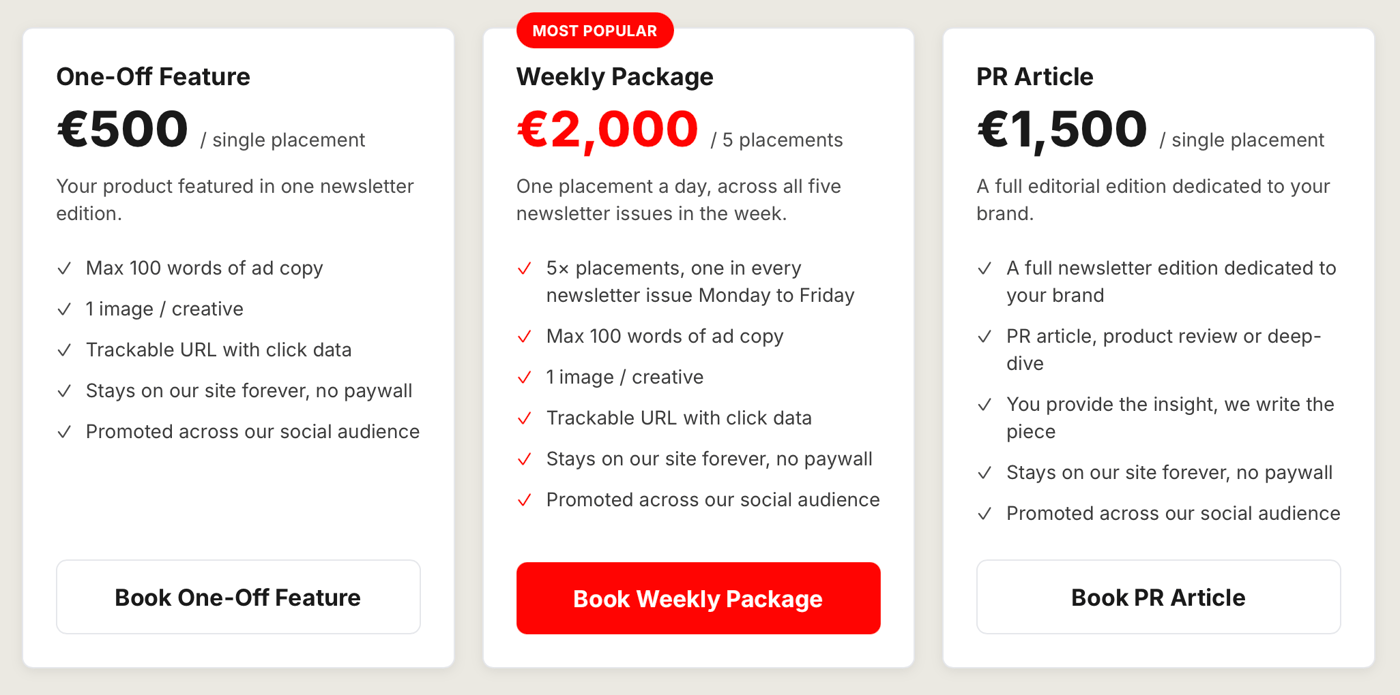
If you sell to marketing teams, a single placement is €500 and a full week is €2,000.
If you want to place an ad, simply reply to this email or check our media kit.
From our other newsletters today:
AI-Ready Ads: England Netball built a 100-foot player with AI Brothers & Sisters' film shows women building a giant netball player, one foot for each year.
AI-Ready GTM: SaaStr's AI co-sold two six-figure deals in a week. Copy its playbook It priced the custom work and prepped procurement while a person ran every call.